
2026-04-07
- Athlete: Sidney McGill
- Username: sidney
- Timezone: America/Edmonton
- Last updated: 2026-04-13 consolidation migration
Summary
Consolidated daily log created from legacy Coach Luca records.
Activities
- No confirmed athlete activity consolidated for this date.
Coach Luca
- No coordinator synthesis consolidated for this date.
Endurance
Heartbeat
- Daily endurance log created during heartbeat check.
- Race schedule still contains only placeholder entries as of 2026-04-06.
- Goals and priority events remain incomplete.
- Current working constraint: do not prescribe event-specific specificity or load progression from assumed race demands until Coach Luca updates planning inputs.
Risks / Flags
- Stale-assumption risk: any session specificity based on a presumed target event would be unsupported.
- Load-distortion risk: incomplete race calendar and goals can push intensity distribution or long-session structure in the wrong direction.
Current stance
- Protect freshness.
- Keep recommendations general and conservative until athlete-specific event demands are confirmed.
- Escalate planning gaps to Coach Luca if training decisions require event specificity.
Recovery
- Agent: recovery
- Owner: recovery
- Related planning inputs reviewed: goals, race schedule, travel schedule
Key Observations
- Today's recovery log was created during heartbeat upkeep.
- Planning inputs remain scaffold-only with no athlete-specific travel, race, or goal updates since 2026-04-06.
- No athlete-specific readiness, sleep, HRV, mood, illness, or travel-fatigue data are documented yet.
Recovery Risk Review
- No new travel or schedule change is present that alters current recovery risk.
- Main risk remains false confidence from missing recovery context rather than documented fatigue escalation.
Watch Items
- Hidden fatigue risk cannot be assessed well until athlete-specific load, sleep, and travel patterns are available.
- Any future travel or race-density update should trigger explicit recovery re-weighting.
Handover For Coach Luca
- No new schedule-driven recovery risk identified today.
- Unresolved readiness issue: athlete-specific recovery markers are still missing, so load changes should stay conservative until better context exists.
Strength
- Heartbeat check completed at 10:57 AM America/Edmonton.
- Created today’s strength log because it did not yet exist.
- Reviewed planning inputs: goals, race schedule, and travel schedule remain athlete-detail pending; no new schedule changes available.
- Gym timing and activation needs cannot be refined further until Coach Luca populates race/travel context.
- No current interference risk identified from shared planning inputs because no key cycling sessions or events are listed yet.
- Watch item for Coach Luca: once race/travel/training details are added, re-check gym placement against key bike sessions immediately.
Nutrition
Key observations
- Four nutrition items logged today: negligible tomato intake, a slice of gluten-free bread with peanut butter and raspberry jam, a hummus-and-bell-pepper snack, and later a more complete fish-and-rice meal.
- The evening meal improves the overall intake picture because it adds clear protein and a more meaningful carbohydrate base after an afternoon that looked light.
- Consumed timing is currently assumed from athlete wording and receipt time; update if later context changes any item.
Recommendations
- Do not count the tomato item as meaningful fueling on its own.
- The bread with peanut butter and jam plus hummus and bell pepper remain modest snacks rather than robust fueling for demanding training.
- The fish-and-rice bowl is a better recovery or evening meal anchor, but if this followed a long or high-intensity session, additional carbohydrate may still be useful to fully cover glycogen restoration needs.
Watch items
- Keep Received and Consumed timing separate whenever later athlete context changes the default assumption.
- Flag underfueling, hydration gaps, or recovery shortfalls if new intake items suggest them.
- Watch for a pattern where earlier-day intake stays light and more substantial fueling only appears later in the day.
Open questions
- Were the bread item and hummus-with-pepper snack intended as general afternoon eating, pre-ride fueling, or post-session recovery?
- Was the fish-and-rice bowl a post-training dinner or simply a normal evening meal?
Summary
15:59
- Received: 2026-04-07 15:59 MDT
- Consumed: assumed 2026-04-07 15:59 MDT (defaulted to receipt time; no athlete-stated timing provided)
- Item: two grape tomatoes shown in hand with package labeled grape tomatoes in the background
- Source media path: /athlete/logs/media/2026-04-07/01-sidney-grape-tomatoes-snack.jpg
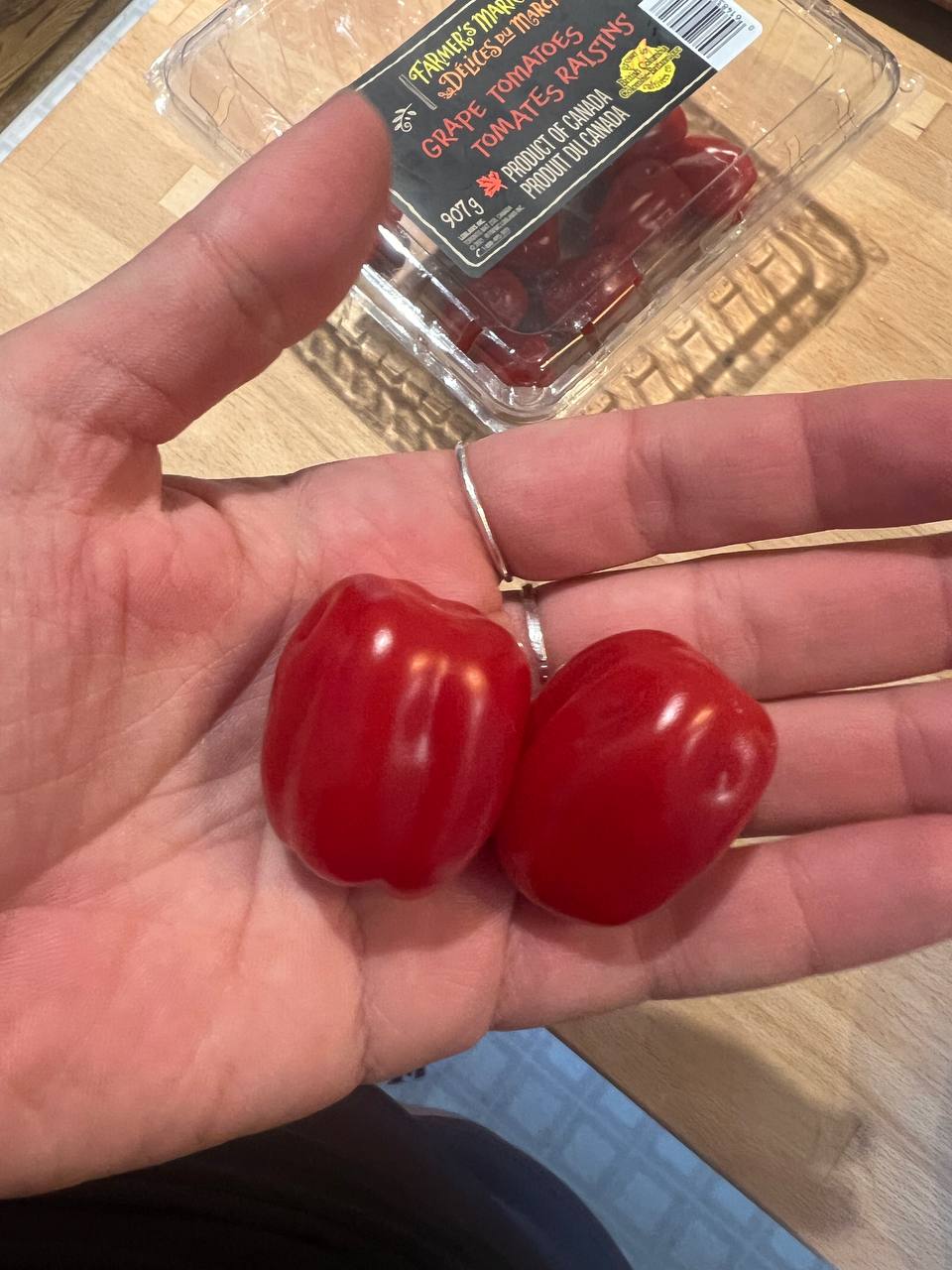
- Estimated intake: Energy 5-10 kcal; carbohydrate 1-2 g; protein 0 g; fat 0 g
- Key assumptions: Intake estimate is based only on the two tomatoes visibly shown, not the full package; No dip, oil, cheese, or additional foods are visible; Because no text accompanied the image, this may represent a small snack, a taste while preparing food, or a photo of food on hand rather than full intake; Estimate kept intentionally conservative because actual consumed quantity is uncertain from the image alone
- Practical implication: If only two tomatoes were eaten, this contributes effectively no meaningful carbohydrate, protein, or energy for training support or recovery; Fine as a low-energy vegetable bite, but it does not count as a substantive snack before or after training; If this was meant to be a snack, athlete likely still needed a real fueling source with carbohydrate and, if post-session, meaningful protein
- Status: complete
16:12
- Received: 2026-04-07 16:12 MDT
- Consumed: assumed 2026-04-07 16:12 MDT (athlete-stated as
just had, resolved to near receipt time) - Item: gluten-free quinoa and chia loaf bread package
- Source media path: /athlete/logs/media/2026-04-07/02-sidney-bread-peanut-butter-jam.jpg
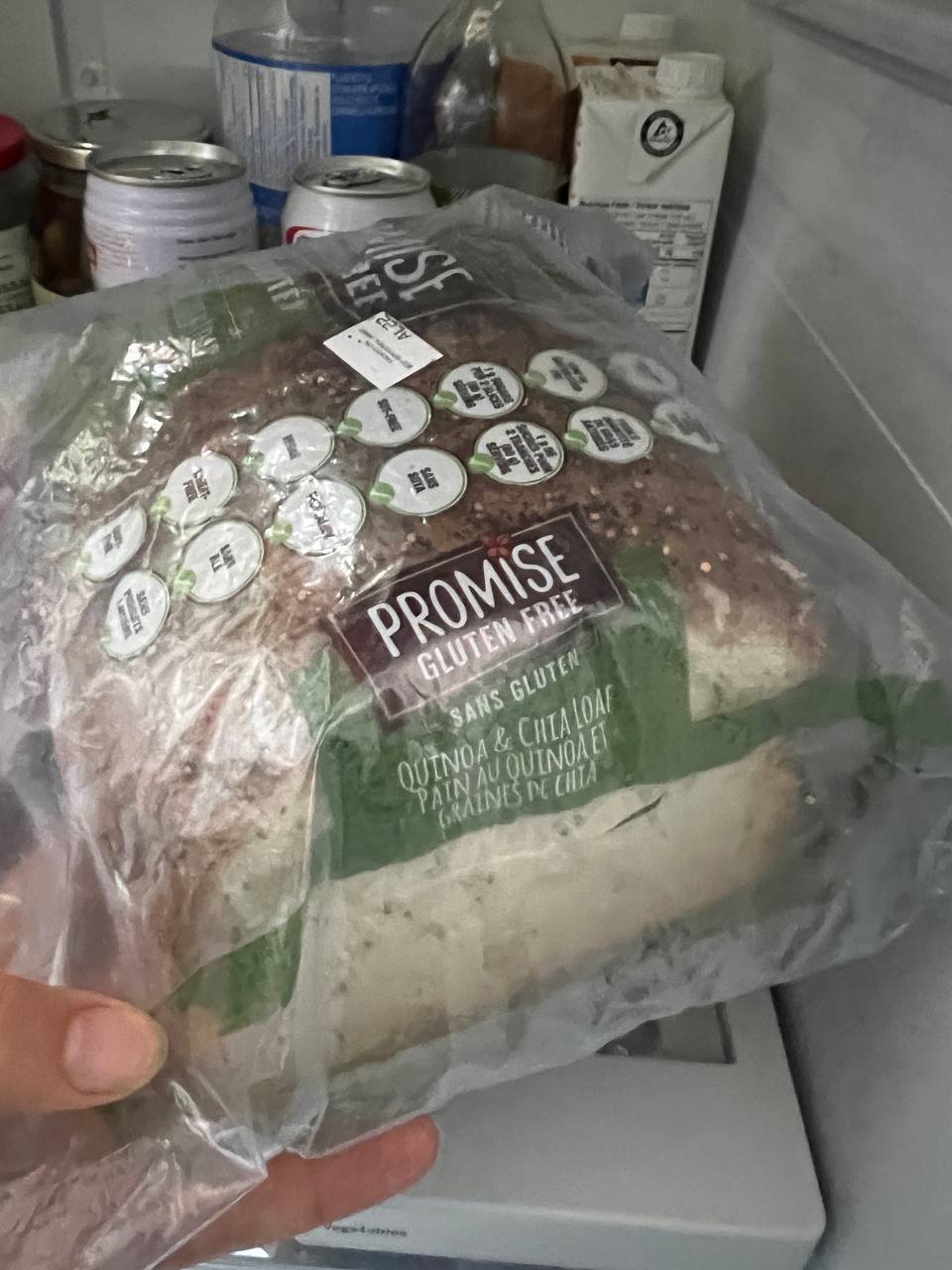
- Estimated intake: Energy 180-280 kcal; carbohydrate 20-35 g; protein 4-8 g; fat 7-14 g
- Key assumptions: Estimate assumes 1 standard slice of gluten-free seeded bread rather than a thick double-cut piece; Peanut butter assumed to be a light-to-moderate spread, roughly around 1/2 to 1 tablespoon; Raspberry jam assumed to be a light-to-moderate spread, roughly around 1 to 2 teaspoons; Brand identity is visible, but nutrition label details are not readable from the image, so range is based on typical values for gluten-free seeded bread plus common spreads; No butter, honey, or second slice assumed
- Practical implication: This is a meaningfully better snack than vegetables alone because it likely supplies usable carbohydrate with a small amount of fat and protein; Carbohydrate dose is still modest, so it works better as a small day-to-day snack or light pre-session top-up than as complete fueling before a long or hard ride; If eaten after training, recovery support is incomplete because protein is likely below an ideal recovery target and carbohydrate is not especially high; If this follows the very low-energy tomato item, it improves the overall afternoon intake picture but still may leave the athlete short if a key session is nearby
- Status: complete
16:16
- Received: 2026-04-07 16:16 MDT
- Consumed: assumed 2026-04-07 16:16 MDT (defaulted to receipt time; no athlete-stated timing provided)
- Item: hummus container and sliced orange bell pepper
- Source media path: /athlete/logs/media/2026-04-07/03-sidney-hummus-bell-pepper.jpg
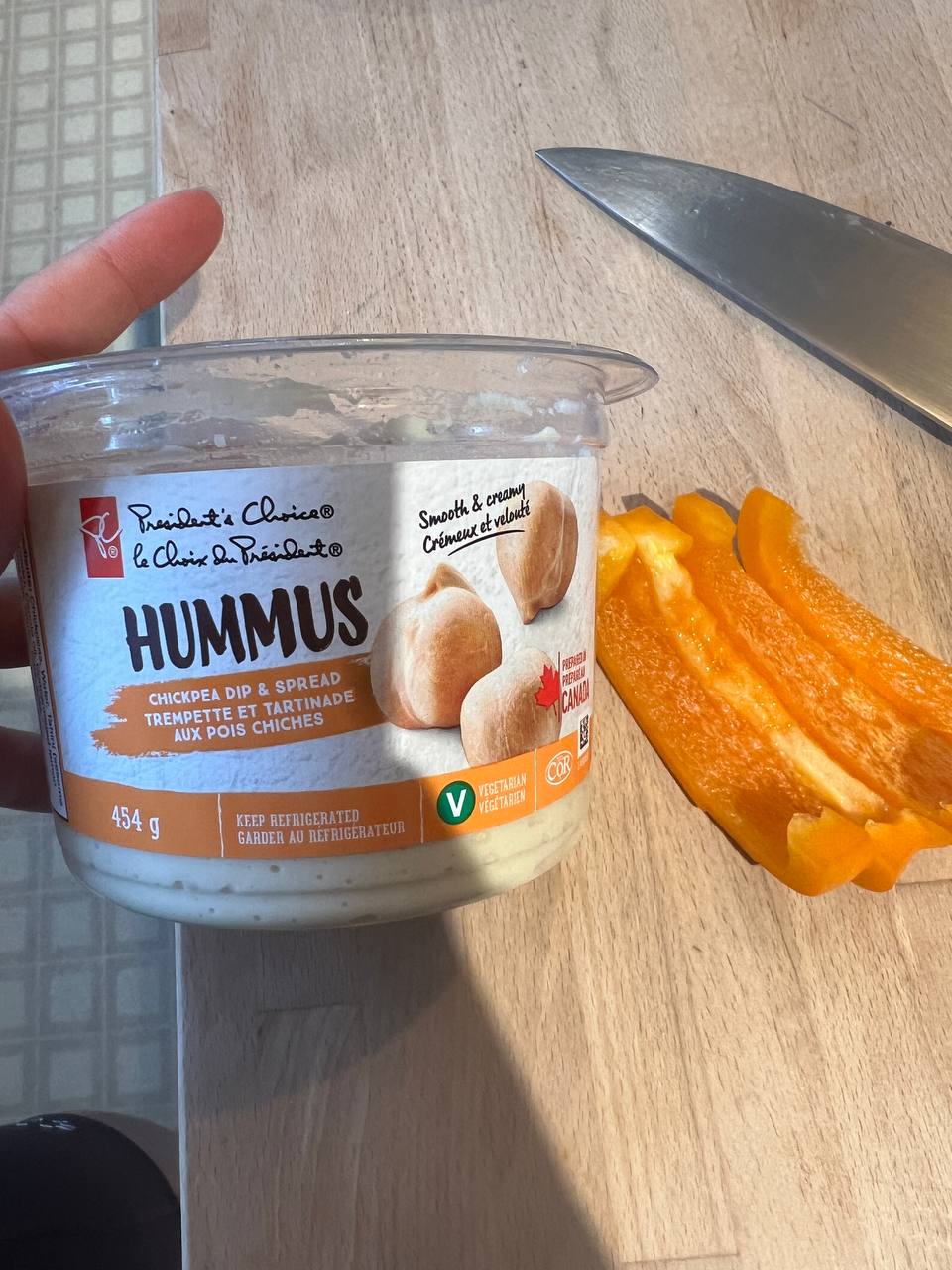
- Estimated intake: Energy 120-220 kcal; carbohydrate 10-18 g; protein 3-6 g; fat 7-14 g
- Key assumptions: Intake estimate assumes roughly 1/4 to 1/2 cup hummus consumed, not the full 454 g container; Bell pepper estimate assumes several visible strips, roughly around 1/4 to 1/2 medium pepper total; Hummus brand and product type are visible, but exact nutrition panel values are not readable from the image; No additional foods are assumed beyond what is visible; Because no text accompanied the image, this may represent a photographed snack in progress rather than the full eating occasion
- Practical implication: This is a better snack than vegetables alone because hummus adds some energy and a small amount of protein and fat; Carbohydrate remains modest, so this is not strong pre-session fueling if a hard or long ride is near; Protein is also modest, so it is not enough on its own for full post-session recovery; If this followed the earlier tomato and bread items in the same afternoon, overall intake improved, but the pattern still leans toward light snacking rather than robust fueling for demanding training
- Status: complete
19:35
- Received: 2026-04-07 19:35 MDT
- Consumed: assumed 2026-04-07 19:35 MDT (defaulted to receipt time; no athlete-stated timing provided)
- Item: bowl with white rice, salmon with brown sugar, paprika, garlic, and onion rub, mango-avocado salad with red onion, cilantro, and lemon juice, plus cucumber in soy-rice-vinegar sauce with sesame seeds
- Source media path: /athlete/logs/media/2026-04-07/04-sidney-fish-rice-mango-avocado-cucumber.jpg
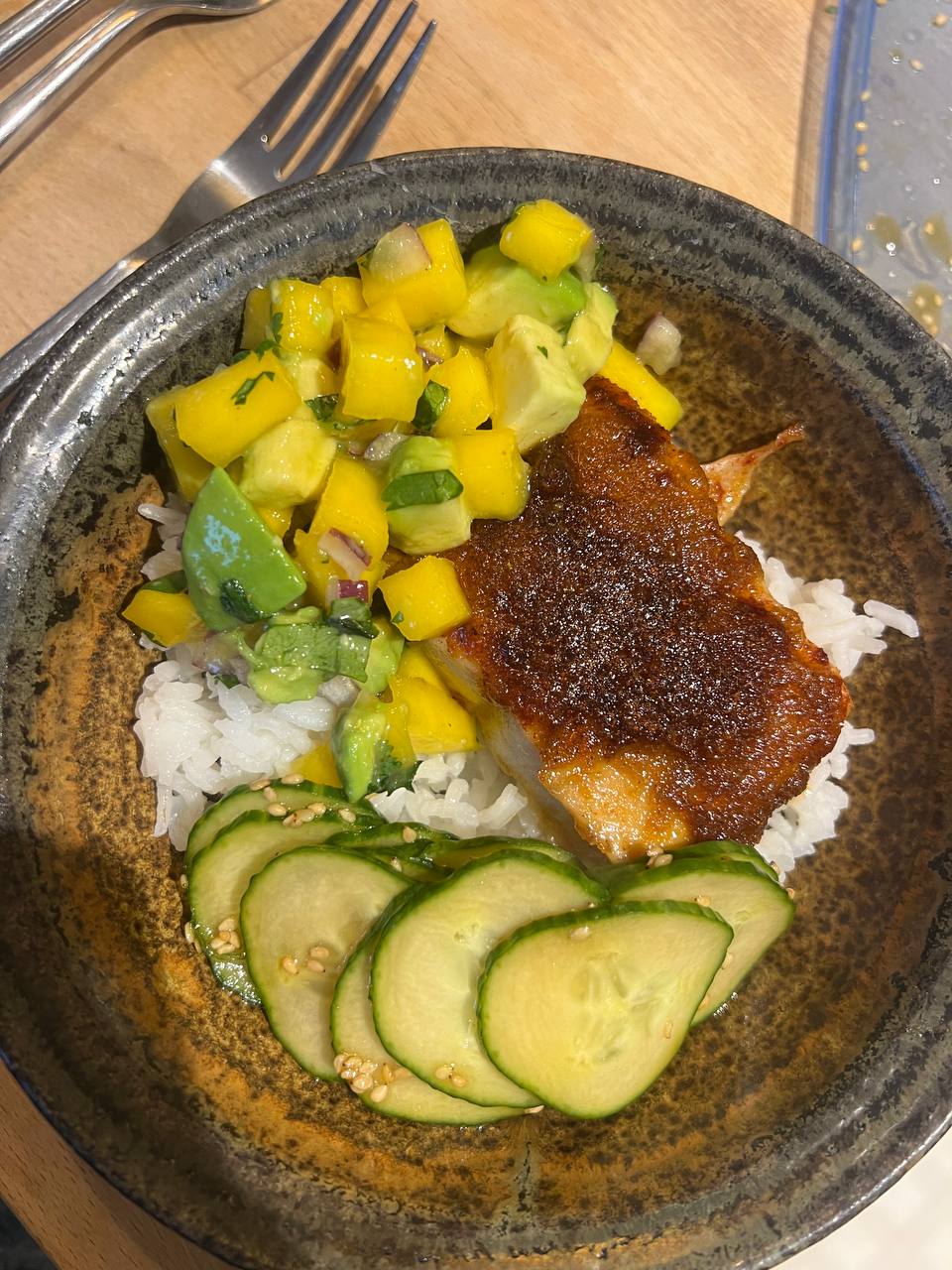
- Estimated intake: Energy 430-540 kcal; carbohydrate 45-55 g; protein 20-26 g; fat 14-20 g
- Key assumptions: Rice estimate is anchored to the athlete-reported 3/4 cup cooked portion; Salmon estimate is anchored to the athlete-reported 80-100 g cooked portion; Brown sugar rub is assumed to contribute a small amount of extra carbohydrate rather than a heavy glaze; Mango-avocado salad likely provides most of the remaining carbohydrate and fat, with avocado amount still estimated from the image because no exact portion was provided; Cucumber contributes little energy, while soy sauce and sesame seeds mainly add sodium, trace fat, and minimal additional calories; No substantial extra cooking oil assumed beyond what would normally adhere during preparation
- Practical implication: This remains a solid mixed meal, but it is now clearer that the carbohydrate dose is moderate rather than large and the protein serving is useful without being especially high; Reasonable for a normal evening meal or lighter recovery meal, but if it followed a long or high-intensity ride, additional carbohydrate and possibly a bit more protein may still be needed to fully cover recovery; The soy-based cucumber side likely helps sodium intake slightly, which can be useful if the meal followed training or heat exposure
- Status: complete
Messages
Morning plan
- No morning plan artifact consolidated for this date.
Evening summary
- No evening summary artifact consolidated for this date.
Same-day inbound highlights
- No additional non-nutrition inbound highlights were consolidated for this date.
System
- Nutrition workflow items routed: 4
Notes
- Legacy sources used for this consolidation:
- athlete/team/endurance/logs/daily/2026-04-07.md
- athlete/team/recovery/logs/daily/2026-04-07.md
- athlete/team/strength/logs/daily/2026-04-07.md
- athlete/team/nutrition/logs/daily/2026-04-07.md
Open items
- Were the bread item and hummus-with-pepper snack intended as general afternoon eating, pre-ride fueling, or post-session recovery?
- Was the fish-and-rice bowl a post-training dinner or simply a normal evening meal?