
2026-04-12
- Athlete: Sidney McGill
- Username: sidney
- Timezone: America/Vancouver
- Last updated: 2026-04-13 consolidation migration
Summary
Sidney's Sunday ride is confirmed as completed with exact workout evidence: 3:06:00 on the bike, 80.4 km, 90 TSS, and IF 0.54. Athlete-reported sensations were broadly good, with mild tiredness and some pacing inconsistency, and ankle status was normal during the ride. This continues to support the conservative rebuild: aerobic durability is being tolerated, while execution rhythm still needs time and consistent training to stabilize.
Activities
10:48 - Endurance ride
- Status: completed
- Session type: endurance ride
- Title: 3.0HR Endurance
- Planned duration: 3:00:00
- Completed duration: 3:06:00
- Distance: 80.4 km
- TSS: 90
- Intensity factor: 0.54
- Work: 1356 kJ
- Calories: 1381 kcal
- Elevation gain: 819 m
- Average speed: 25.9 kph
- Heart rate: 78 min / 147 avg / 175 max bpm
- Power: 135 avg / 434 max W
- Compliance note: completed slightly over planned duration, with athlete-reported mild tiredness and some pacing inconsistency
- Evidence quality: athlete-provided workout screenshot, plus athlete report and same-day nutrition context after TrainingPeaks evidence failed
Coach Luca
Summary
Sidney's Sunday ride is now confirmed with exact workout evidence: 3:06:00, 80.4 km, 90 TSS, and IF 0.54. Athlete-reported sensations were broadly good, with mild tiredness and some pacing inconsistency, and ankle status was normal during the ride. This supports the current conservative rebuild: aerobic durability is being tolerated, while execution rhythm still needs time and consistent training to stabilize.
Coordination
- Morning note was present and prescribed a 2:45-3:00 long aerobic endurance ride with a shorter option if fatigue or ankle status warranted it.
- Evening review followed the required read order and used athlete confirmation when automated TP evidence failed.
TrainingPeaks evidence
- MCP path failed with AUTH_INVALID when querying 2026-04-12 completed workouts for Sidney.
scripts/tp_check.jsreturned the TrainingPeaks login page rather than activity data.scripts/tp_last_activity.jsfailed withTypeError: fetch failed.- No usable automated TP evidence was available.
Decisions
- Classified today's session as Confirmed completed based on athlete report, corroborating same-day nutrition context, and the later workout screenshot with exact metrics.
- Kept the coaching interpretation conservative: the ride confirms durability tolerance, but pacing inconsistency argues against adding unnecessary load.
- Left Monday's easy aerobic support ride unchanged, including the shorter-duration fallback if residual fatigue is present.
- Carried forward Wahoo sensor confirmation as an operational priority before the next key session.
Risks and constraints
- TrainingPeaks evidence path is degraded due to auth failure and unusable legacy fallback output.
- Recovery and endurance specialist daily logs for 2026-04-12 were missing, so domain review relied partly on athlete-reported context.
- Fueling remains adequate enough to support the current work, but post-ride carbohydrate replacement still looks easy to undershoot.
- Current limiter remains rhythm and consistency, not willingness to train.
Required follow-up
- Check Monday for residual leg heaviness and pacing smoothness after the completed weekend block.
- Re-establish usable TrainingPeaks access before the next evening pass if possible.
- Continue to verify Wahoo power and heart rate recording before key sessions.
- Keep Monday fully aerobic and avoid turning it into added load if sensations are flat.
Endurance
Daily status
- No same-day endurance specialist log was present.
- Athlete report and later screenshot evidence indicate the ride matched the planned session type closely, with slight duration overrun and the main execution issue being pacing smoothness rather than capacity.
Recovery
Daily status
- Today’s recovery assessment is based on your training and nutrition, rather than a separate recovery check-in. Send a message with how you are feeling, any concerns, and anything that is going well, and I can update the recovery assessment.
- Athlete-reported signals were favorable overall: mild tiredness after the ride, but no ankle issue during the session.
- Residual fatigue still needs checking tomorrow morning.
Strength
- No specialist note consolidated for this date.
Nutrition
Daily status
- Same-day nutrition log was present and current.
- Breakfast was light.
- Ride fuel improved with two homemade peanut butter and banana bars.
- Post-ride intake included protein and some carbohydrate, but total recovery carbohydrate may still be a little short relative to a 3-hour ride.
Key observations
- Breakfast, during-ride intake, and post-ride intake are all logged today.
- Morning breakfast appears light if it stood alone, especially for any meaningful training demand later in the day.
- The newly logged bars improve the on-bike fuel picture, but they do not fully close it for a 3-hour endurance ride unless other carbohydrate sources were also used.
- Post-ride recovery gap today remains carbohydrate, not sodium.
- Protein was close to a useful minimum snack dose in the later post-ride item, but that intake alone will not restore glycogen meaningfully after a 3-hour endurance ride.
Recommendations
- If training demand was more than easy or short, the breakfast likely needed an additional carbohydrate source and a clearer protein hit elsewhere in the morning.
- For similar 3-hour endurance rides, keep the homemade bars if they sit well, but add easier carbohydrate in bottles, fruit, chews, or gels so hourly carbohydrate is better covered.
- Pair meat-based recovery snacks with fast carbohydrate immediately after long rides.
- Keep a simple default option available: recovery drink, chocolate milk, rice, potatoes, bread, cereal, or extra fruit alongside the protein source.
Watch items
- Fat- and fiber-heavier homemade bars can help energy intake but may still undershoot rapid carbohydrate delivery during longer rides.
- Lower-carbohydrate savory snacks can look substantial but still undershoot post-ride recovery needs after longer endurance sessions.
- Repeated single-slice bread-with-spread breakfasts can leave total morning intake light unless paired with more carbohydrate and protein.
- Keep Received and Consumed timing separate whenever later athlete context changes the default assumption.
Summary
16:55
- Received: 2026-04-12 16:55 MDT
- Consumed: 2026-04-12 breakfast
- Item: 1 piece of toast with peanut butter and jam, similar to previously sent bread-with-peanut-butter-and-jam meals
- Estimated intake: Energy 230-300 kcal; carbohydrate 30-40 g; protein 5-8 g; fat 9-14 g
- Key assumptions: Estimate is intentionally anchored to the earlier recurring single-slice bread-with-peanut-butter-and-jam items rather than treated as a larger double-toast breakfast; Bread is treated as 1 standard slice with a moderate peanut butter spread and moderate jam spread; Because the athlete did not restate the jam flavor or bread brand here, those details are carried only as likely context from prior similar items, not as confirmed facts for this specific entry; No second piece of toast, drink, fruit, yogurt, or additional breakfast food is assumed
- Practical implication: This is a workable light breakfast or top-up, but it remains modest for a rider if a meaningful training session follows later in the morning; Carbohydrate is useful, but the overall dose is still on the low side for bigger session preparation unless more carbohydrate was added elsewhere; Protein remains too low to count as meaningful recovery support or as a complete breakfast on a harder training day; Repeated reliance on single-slice bread-with-spread breakfasts can leave total morning intake light even when hunger is partly covered
- Status: complete
17:05
- Received: 2026-04-12 17:05 MDT
- Consumed: 2026-04-12 post-ride (athlete-stated)
- Item: 3 all-beef meat sticks and 5 large strawberries
- Source media path: /athlete/logs/media/2026-04-12/01-sidney-meat-sticks-label.jpg
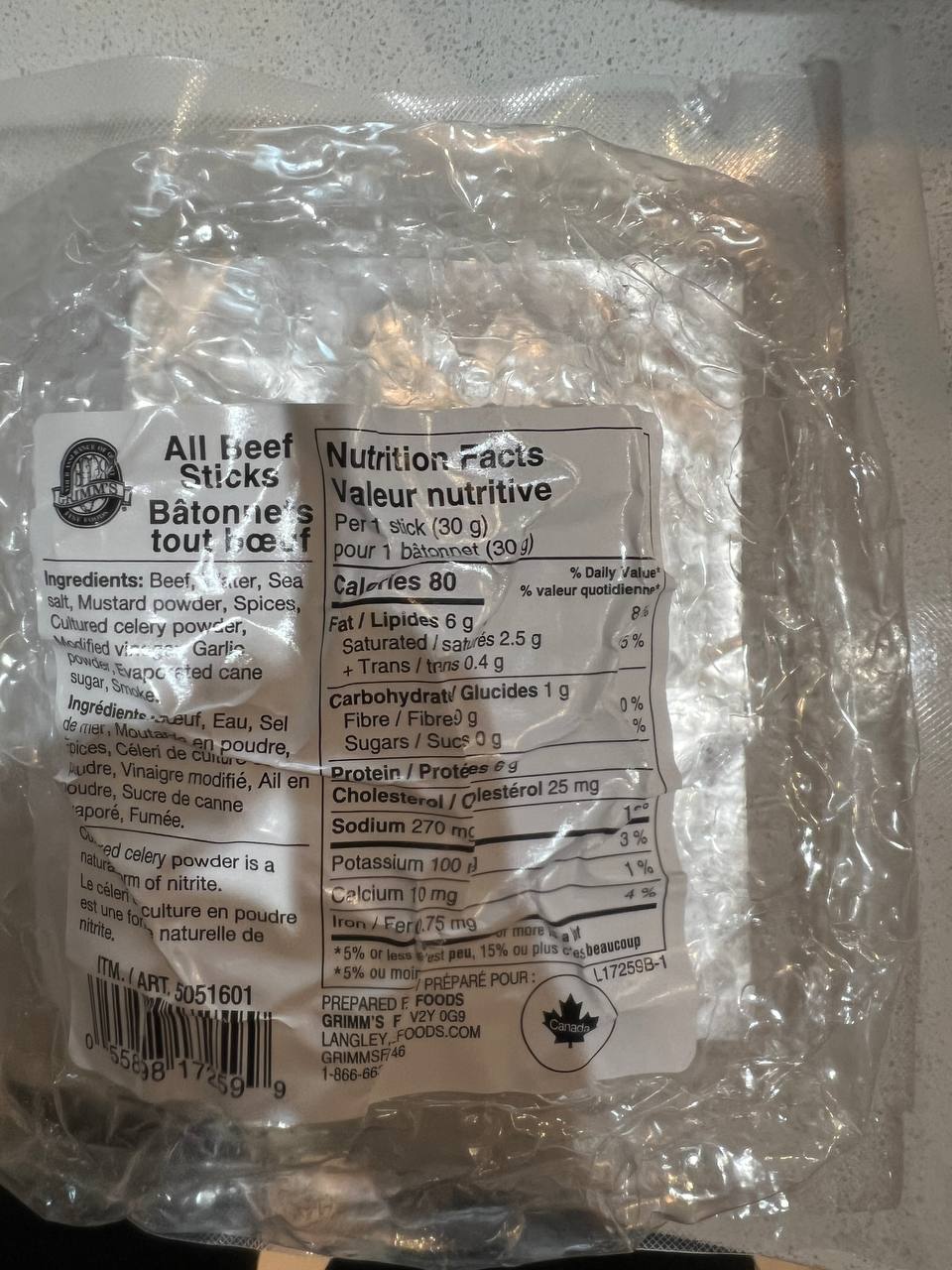
- Estimated intake: Energy 270 kcal; carbohydrate 10 g; protein 19 g; fat 18 g
- Key assumptions: Each meat stick was treated as one full 30 g serving from the visible label; Five large strawberries were estimated at approximately 90 g total edible portion; No recovery drink, extra carbohydrate, or additional food was assumed beyond what the athlete reported
- Practical implication: Protein is close to a useful post-ride minimum snack hit, but carbohydrate is far too low for effective glycogen restoration after a 3-hour endurance ride; Sodium is meaningful, which may help replace some sweat losses, but this does not solve the recovery carbohydrate gap; As a bridge snack this is acceptable only if a real recovery meal with substantial carbohydrate follows soon after; Better immediate post-ride recovery would be to pair this with a fast-carb source such as rice, potatoes, bread, cereal, recovery drink, or fruit plus yogurt or milk
- Status: complete
17:06
- Received: 2026-04-12 17:06 MDT
- Consumed: 2026-04-12 snack (athlete-stated as
right now) - Item: 2 mandarin oranges
- Estimated intake: Energy 70-90 kcal; carbohydrate 18-22 g; protein 1-2 g; fat 0 g
- Key assumptions: Each mandarin was treated as a typical small easy-peel orange rather than a very large orange or tiny clementine; No additional foods or fluids were assumed beyond the fruit itself
- Practical implication: Fine as a light snack or small carb top-up during the day; This is useful for quick carbohydrate, but it is still a small intake and not enough on its own for post-session recovery or to cover a bigger training demand; If this sat near training, it can help a little, but harder or longer work would usually need more total carbohydrate and, after the session, a protein source as well
- Status: complete
19:21
- Received: 2026-04-12 19:21 MDT
- Consumed: 2026-04-12 18:51 (athlete-stated as
30 min ago) - Item: 16-20 rice cakes of the pictured product
- Source media path: /athlete/logs/media/2026-04-12/02-sidney-rice-cakes-label.jpg
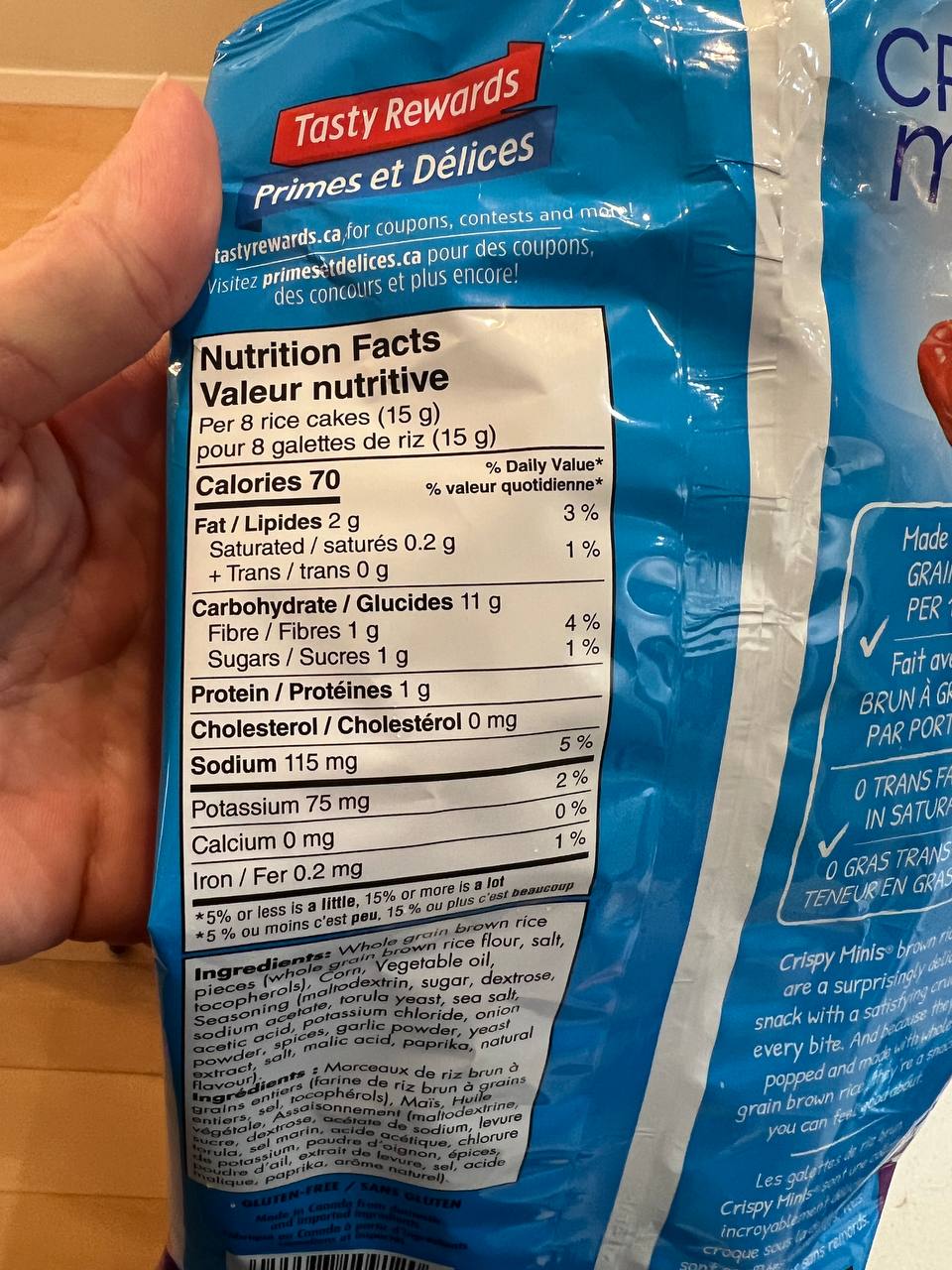
- Estimated intake: Energy 140-175 kcal; carbohydrate 22-27.5 g; protein 2-2.5 g; fat 4-5 g
- Key assumptions: Estimate assumes the athlete ate only the rice cakes described, with no added spread, drink, or additional recovery food included in this specific item; The label values were scaled exactly from the stated per-8-rice-cake serving rather than replaced by a broader heuristic estimate; Because the count is reported as a range, totals are left as a range rather than forced to a midpoint
- Practical implication: This is a useful post-ride carbohydrate top-up because it gives a quick, low-fiber 22-27.5 g carbohydrate hit without much GI burden; Relative to a 3-hour endurance ride, it is still only a partial recovery step, not a complete one; carbohydrate remains modest and protein is effectively absent for full recovery purposes; It works better as an immediate bridge snack than the earlier meat-stick snack from a glycogen-replacement perspective, but it still needs to be followed by a real recovery meal or drink with substantially more carbohydrate plus meaningful protein and fluid; If the athlete tolerated this easily, rice cakes are a practical low-bulk option to keep around for immediate post-ride carbohydrate when appetite is flat
- Status: complete
19:22
- Received: 2026-04-12 19:22 MDT
- Consumed: during 2026-04-12 ride
- Item: 2 homemade peanut butter and banana energy bars from the linked recipe
- Estimated intake: Energy 556 kcal; carbohydrate 56 g; protein 18 g; fat 32 g
- Key assumptions: The athlete ate 2 bars that matched the cited recipe serving size and nutrition closely enough to use the recipe values directly; No additional on-bike drink calories, gels, chews, or other ride fuel were assumed in this entry; Because these bars are peanut-butter-based and relatively high in fat and fiber, they were assessed as slower and heavier fuel than a lower-fat race-style carbohydrate source
- Practical implication: Two bars materially improve the ride-fueling picture because they add approximately 56 g of carbohydrate that was not previously captured; Even so, for a 3-hour endurance ride this still looks like only a modest on-bike carbohydrate dose unless there was meaningful drink mix or other fuel alongside it; The bars are calorie-dense, but 32 g fat and 10 g fiber make them a relatively slow and potentially heavier gut load compared with simpler on-bike carbohydrate options; Fine if the ride stayed controlled and easy to steady endurance, but likely still below a strong carbohydrate target for best support across the full 3 hours; Practical upgrade for similar rides: keep homemade bars if tolerated, but pair them with easier carbs in bottles, bananas, chews, or a gel so total hourly carbohydrate is better covered without relying only on fat-heavy bars
- Status: complete
19:46
- Received: 2026-04-12 19:46 MDT
- Consumed: assumed 2026-04-12 19:46 MDT (defaulted to receipt time; no athlete-stated timing provided)
- Item: small bowl of shredded cabbage slaw with green onion, red cabbage, mushrooms, and light dressing or vinaigrette
- Source media path: /athlete/logs/media/2026-04-12/03-sidney-cabbage-mushroom-green-onion-salad.jpg
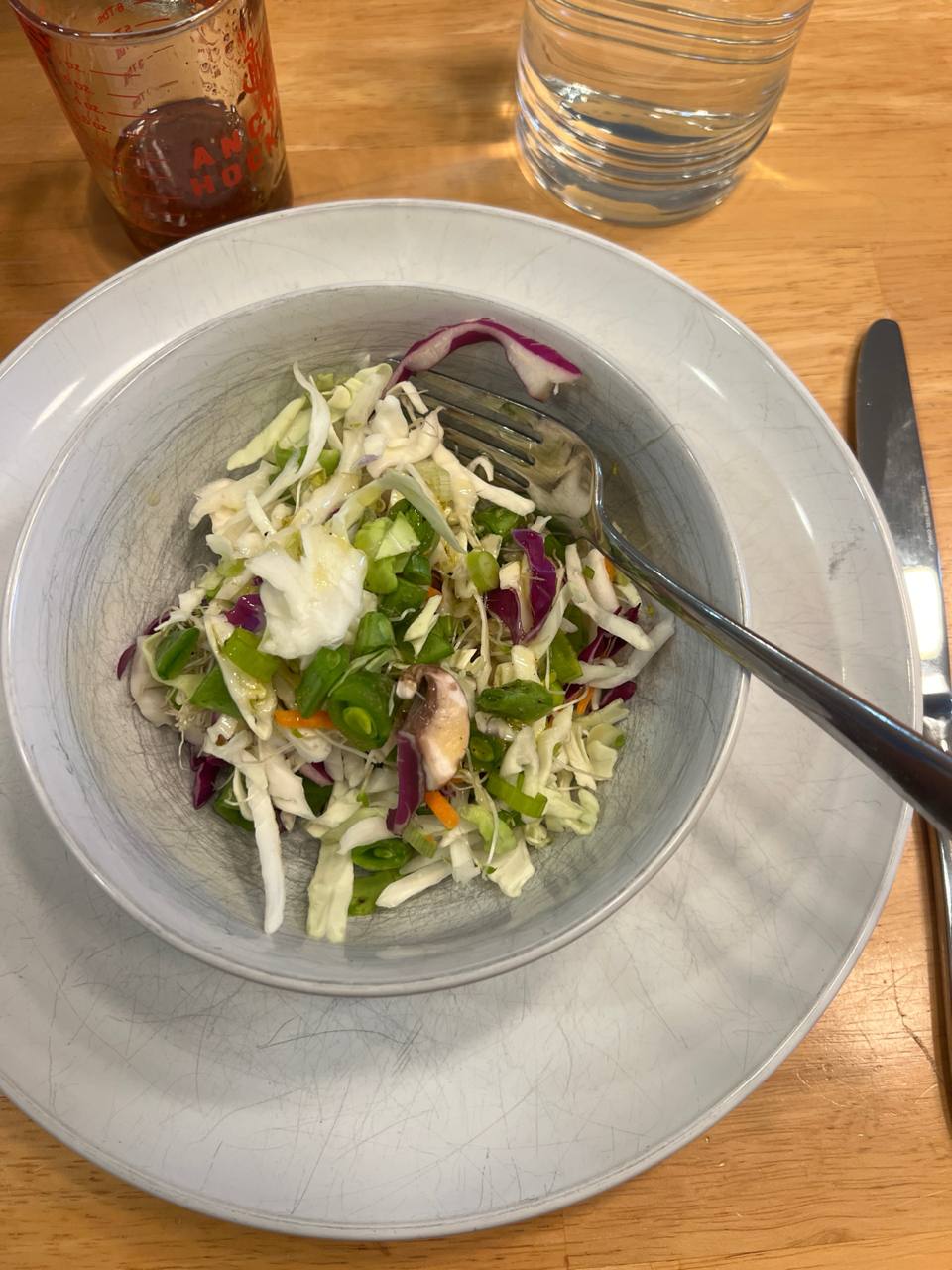
- Estimated intake: Energy 70-95 kcal; carbohydrate 6-9 g; protein 1-2 g; fat 5-7 g
- Key assumptions: Portion treated as a small side bowl, not a large entrée salad; Dressing treated as light and oil-based rather than creamy, roughly around 12 g total used; No nuts, cheese, seeds, croutons, or hidden protein source assumed because none are visible; Estimate intentionally stays conservative because the item looks vegetable-dominant with limited energy density
- Practical implication: This is fine as a vegetable side, but it contributes very little usable carbohydrate, protein, or total energy for training support or recovery on its own; The dressing likely lifts energy slightly, but this still reads as a low-calorie accompaniment rather than a meaningful fueling item; Practical takeaway: count it as micronutrient- and fiber-supportive, not as a substantive snack or recovery feeding
- Status: complete
19:50
- Received: 2026-04-12 19:50 MDT
- Consumed: assumed 2026-04-12 19:50 MDT (defaulted to receipt time; no athlete-stated timing provided)
- Item: grilled chicken breast, 5 small potatoes, roasted squash, and roasted peppers
- Source media path: /athlete/logs/media/2026-04-12/04-sidney-chicken-potatoes-squash-peppers.jpg
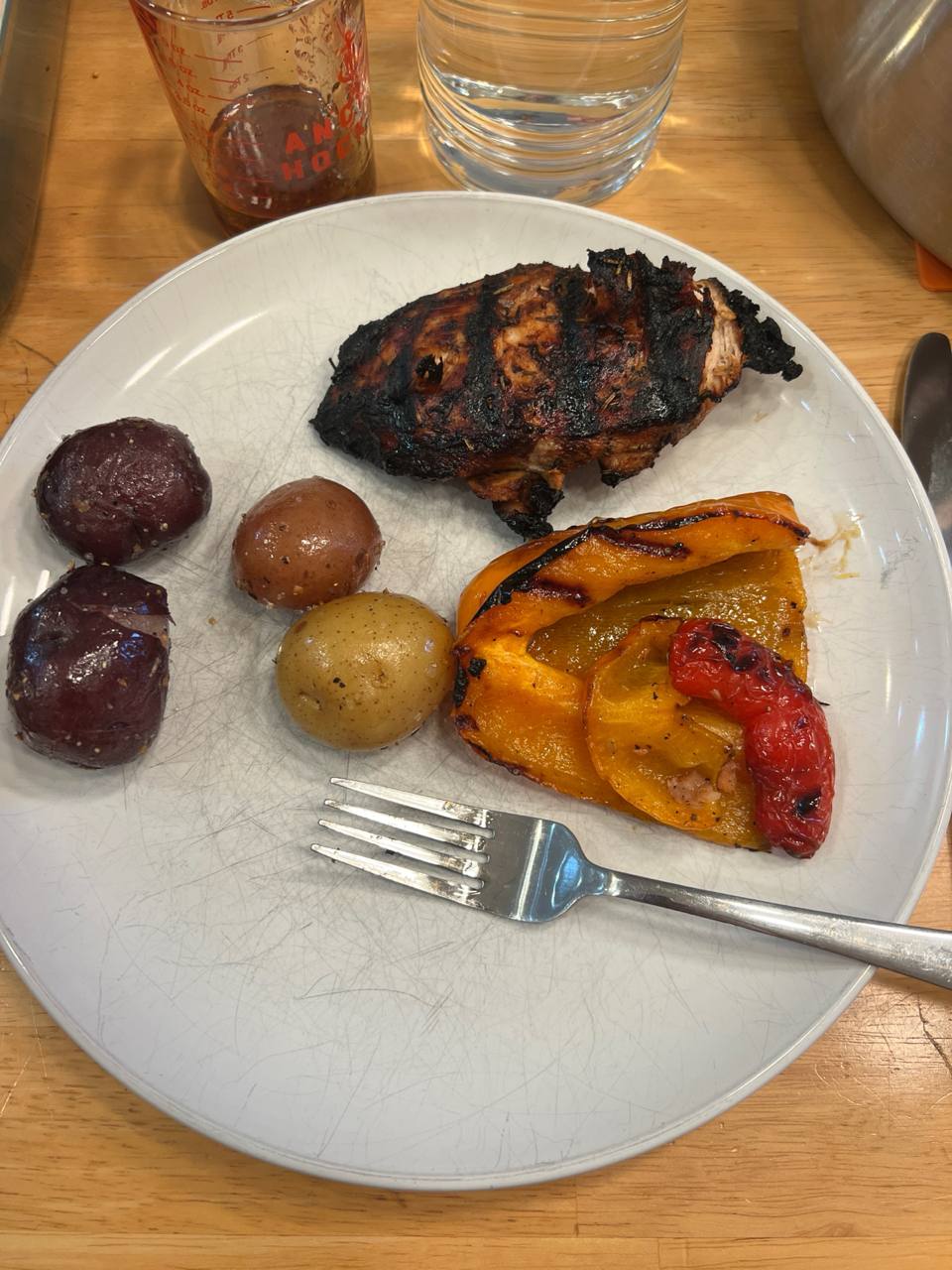
- Estimated intake: Energy 530-600 kcal; carbohydrate 45-55 g; protein 46-53 g; fat 14-20 g
- Key assumptions: Chicken is treated as one lean cooked breast portion rather than a thigh or heavily glazed cut; Potato portion is now treated as roughly 5 small baby potatoes total after the athlete clarified one more potato was eaten; Squash and peppers are treated as non-starchy roasted vegetables with modest oil exposure rather than heavily dressed sides; Water shown beside the plate is not counted because actual consumed volume is not confirmed from the photo
- Practical implication: This remains a solid balanced dinner plate and clearly stronger than a light snack because it likely gives a meaningful protein hit plus a now slightly larger starch serving; Protein support looks strong for a normal evening meal or for helping recovery later in the day; The extra baby potato modestly improves the carbohydrate side, making the meal a bit more supportive for glycogen restoration than first estimated; Practical read: still a good quality dinner, and the added potato helps, but on a bigger training day it may still benefit from a larger starch portion or another easy-carb side if fuller recovery was the goal
- Status: complete
22:13
- Received: 2026-04-12 22:13 MDT
- Consumed: 2026-04-12 22:13
- Item: 1 Pink Lady apple with 2.5 tbsp peanut butter
- Estimated intake: Energy 330-340 kcal; carbohydrate 33-35 g; protein 9-10 g; fat 20-21 g
- Key assumptions: Apple is treated as 1 medium fruit rather than a small snack apple or an unusually large apple; Peanut butter is converted from 2.5 tbsp to approximately 40 g using a standard household measure anchor; No honey, cinnamon, bread, yogurt, or additional foods are assumed; Peanut butter is treated as a generic product and not a reduced-fat or sweetened specialty spread
- Practical implication: This is a more substantial snack than fruit alone because it adds a meaningful energy bump plus some protein and fat; Carbohydrate is decent, but the peanut butter makes the snack relatively fat-heavy, so it is slower and less ideal than simpler carb options when fast glycogen restoration is the priority; Practical read: useful as a filling evening snack, but not the cleanest choice if the main goal was rapid post-endurance carbohydrate replacement; If a rider is still trying to close a big carbohydrate gap after a long ride, extra lower-fat carbohydrate would usually help more than more nut butter
- Status: complete
22:20
- Received: 2026-04-12 22:20 MDT
- Consumed: 2026-04-12 22:20
- Item: 3 tbsp of the pictured dairy-free ice cream
- Source media path: /athlete/logs/media/2026-04-12/06-sidney-ice-cream-label-corrected.jpg
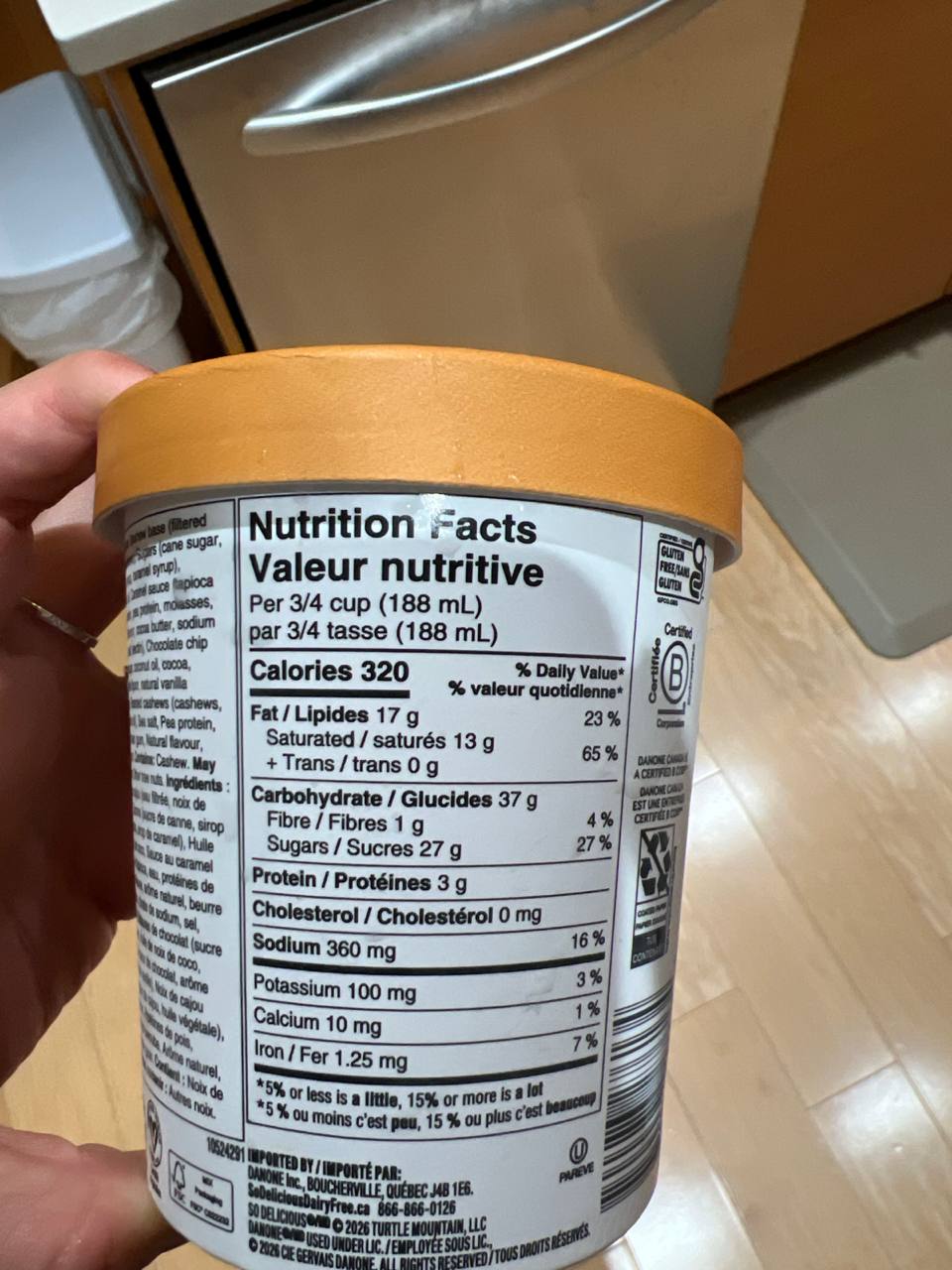
- Estimated intake: Energy 80 kcal; carbohydrate 9.25 g; protein 0.75 g; fat 4.25 g
- Key assumptions: Intake is treated as exactly 3 tbsp and not 3 scoops of unknown size; Corrected label values are assumed to apply to the same consumed portion and supersede the earlier label used at 22:20; No cone, toppings, syrup, or companion foods are assumed; Because only the nutrition facts panel is clearly visible, dietary compatibility remains unverified without the full ingredient list
- Practical implication: This is still a small dessert-sized portion, but it is meaningfully larger than the first estimate because the corrected label is much denser; Even with the correction, the amount remains too small to meaningfully help post-ride glycogen restoration or protein recovery; Practical read: count it as a small dessert add-on, not a recovery strategy
- Status: complete
Messages
Morning plan
Good morning, Sidney

**Readiness:**
Unconfirmed, no morning athlete check-in, yesterday's session outcome is unconfirmed, and the latest recovery and nutrition input is from the prior evening.

**Today’s plan:**
Long aerobic endurance ride. 2:45-3:00 on the road, shorten to 2:15-2:30 if the legs feel heavy or the ankle is not quiet. Z2 throughout on non-technical terrain, smooth cadence, no surges. The final 20 minutes may drift to upper Z2 only if you feel stable and HR stays controlled. If there is any doubt about fatigue carryover, keep the whole ride steady Z2.

**Fueling:**
Take in 90-110 g carbohydrate before the ride if timing allows. On the bike, target 75 g carbohydrate per hour, 500-750 mL fluid per hour, and 700-900 mg sodium per liter. Get a strong recovery meal in within 60 minutes, with at least 25-30 g protein.

**Weather:**
Victoria, BC 🌦️
12°C / 7°C, light drizzle

Cool air, low overall rain probability, and a light-to-moderate breeze later in the day. A brief damp section is possible, but conditions are still workable for a steady road endurance ride.

Start with a light extra layer for the first hour, and keep the route simple so you do not end up pushing into the wind or turning this into a harder day than planned.

**Monitor:**
If the ankle is not quiet in the first 20-30 minutes, cap the ride at the shorter end and keep it flat. Confirm the Wahoo is recording power and heart rate before rollout.

/luca
/recovery
/nutrition
Evening summary
Good evening, Sidney

**Today's session:**
Long aerobic endurance ride completed as planned: 3:00 endurance, 81 km, average heart rate 148 bpm. You reported that it felt good overall, with a bit of tiredness and some pacing inconsistency.
[Certainty: Confirmed completed]

**Feedback:**
This was a solid durability ride. The main positive is that you handled the full duration with normal ankle status. The only flag is execution rhythm, not fitness. The uneven pacing fits the recent lack of training consistency more than any real limitation in aerobic tolerance.

**Recovery:**
Keep the rest of the evening quiet. Rehydrate steadily, and make sure total post-ride carbohydrate is completed, not just protein and savory snack intake. A full night's sleep matters more than adding anything extra tonight. Gentle mobility only.

**Tomorrow preview:**
Easy aerobic support ride, 1:30-1:45 on the road, Z2 only. If the legs feel residual fatigue from today, shorten it to 60-75 minutes and keep it fully aerobic.

**Monitor:**
Watch for residual leg heaviness, pacing smoothness, and any ankle irritation around clipping out or stopping. Also confirm the Wahoo is recording power and heart rate before the next key session.

/luca
/recovery
/nutrition
/endurance
Same-day inbound highlights
- Athlete-reported long endurance ride completion was already reflected in the day.
- Later workout screenshot provided exact ride metrics: 3:06:00, 80.4 km, 90 TSS, IF 0.54.
System
- 08:00: sidney - morning-plan (Coach Luca)
- 20:00: sidney - evening-summary (Coach Luca)
- 20:49: sidney - evening-summary (Coach Luca)
- 21:00: sidney - evening-summary (Coach Luca)
- Nutrition workflow items routed: 12
Notes
- Exact Sunday workout metrics were later added from an athlete-provided screenshot after the initial consolidation.
- Legacy sources used for this consolidation:
- athlete/team-reports/daily/2026-04-12.md
- athlete/athlete-notes/daily/2026-04-12-morning.md
- athlete/athlete-notes/daily/2026-04-12-evening.md
- athlete/team/nutrition/logs/daily/2026-04-12.md
Open items
-
Check Monday for residual leg heaviness and pacing smoothness after the completed weekend block.
-
Re-establish usable TrainingPeaks access before the next evening pass if possible.
-
Continue to verify Wahoo power and heart rate recording before key sessions.
-
Keep Monday fully aerobic and avoid turning it into added load if sensations are flat.
-
Unknown whether bottles or other quick carbs were used during the ride.